
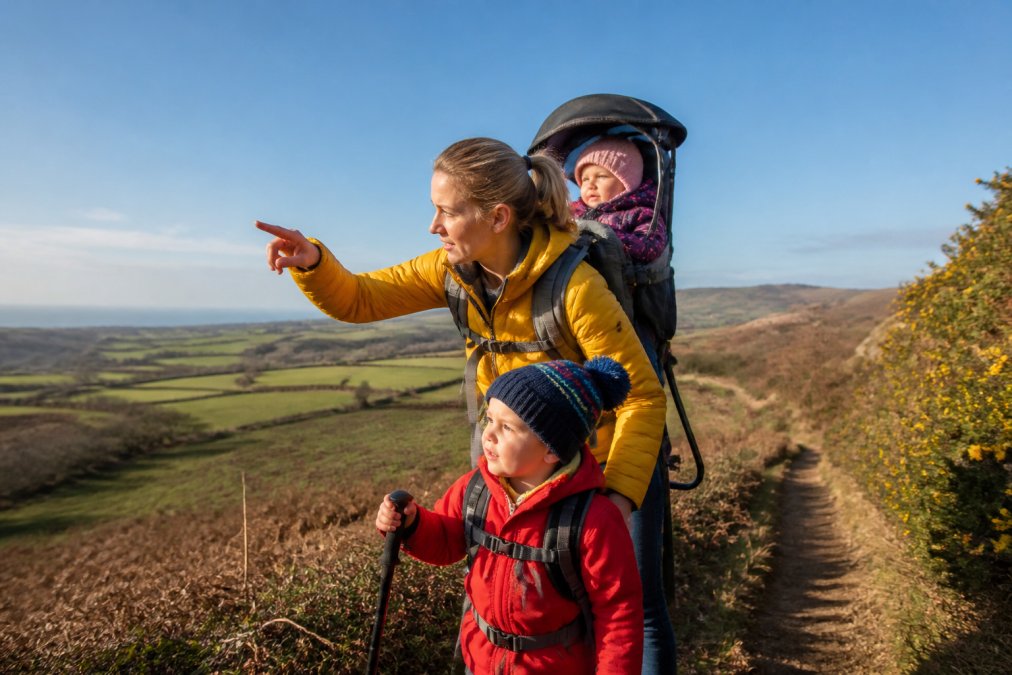
How to Hike with Toddlers Safely: A Family Guide
26 August 2026
Table of Contents
- Assess Your Toddler's Readiness and Choose the Right Age to Start
- Toddler Hiking Gear Essentials: What You Actually Need
- Plan Your Route: Best Family Walks Near Salcombe
- Safety First: Protecting Toddlers on the Trail
- How to Keep Toddlers Engaged on Hikes
- Pace, Duration, and Rest: Getting the Balance Right
- Prepare for Common Challenges and Know When to Turn Back
- Conclusion
Assess Your Toddler's Readiness and Choose the Right Age to Start
Toddlers aged 18 months and upwards can join family walks, though readiness depends more on individual temperament and fitness than age alone (aap.org). Before your first outing, assess whether your toddler can walk unassisted for at least 10-15 minutes without frustration (peer-reviewed research). Watch how they handle uneven ground in your garden or local park, and whether they naturally gravitate towards exploring outdoors.
Starting with very short distances is crucial. A 20-minute walk on a flat, well-maintained path builds confidence and positive associations with being outdoors. Short walks also let you test your gear and identify what works before attempting longer routes near Salcombe and the surrounding South Devon area. Consider your own fitness level too, you'll be managing your toddler's pace, mood, and safety whilst staying present and alert.
Toddler Hiking Gear Essentials: What You Actually Need
The most common mistake parents make is overpacking. You don't need specialist equipment; focus on practical clothing, a way to carry your child when they tire, and items that make the walk safer and more comfortable.
Footwear comes first. Toddlers need shoes with good grip, ankle support, and a waterproof outer. Dedicated walking shoes are better for longer distances than trainers designed for indoor play. Check that socks are wool-blend or synthetic; cotton holds moisture and causes blisters.
Clothing layers matter far more than expected. The South Devon coast changes weather quickly. Dress your toddler in a moisture-wicking base layer, a fleece mid-layer, and a waterproof outer jacket. Avoid cotton entirely; it traps sweat and cold. A hat and gloves are essential even in mild weather. Pack a spare jumper in your rucksack regardless of the forecast.
A lightweight rucksack or carrier is non-negotiable. Your child will tire before the walk ends. A good carrier keeps your hands free, distributes weight evenly, and lets your toddler rest whilst you continue. Soft-structured carriers work better than slings for longer walks.
Essentials to pack:
- Water bottle (at least 500 ml) and a beaker your toddler can manage
- Snacks: dried fruit, crackers, cheese, or energy bars
- A basic first aid kit with plasters, antiseptic wipes, and paracetamol
- Nappies and wipes if your child still uses them
- A lightweight waterproof jacket for your toddler
- Sun cream and a hat for sunny days
- A small toy or book for rest stops
- Your phone fully charged
Avoid packing "just in case" items you're unlikely to use. Every kilogramme matters when you're also carrying a toddler.
Plan Your Route: Best Family Walks Near Salcombe
The area around Salcombe in South Devon offers some of the most toddler-friendly coastal walking in the region. Choose routes that combine manageable distance, interesting scenery, and safe terrain.
The South West Coast Path near Bolberry provides stunning views and well-maintained sections suitable for families. The stretch between Salcombe and Marlborough is relatively flat with multiple exit points if your toddler tires. The path is wide in many sections, reducing the risk of your child straying, and coastal views give you natural stopping points.
Overbeck's Gardens and coastal paths near Salcombe offer gentler terrain than some coastal sections.
Local beaches near Bolberry work well for combining a short walk with beach play. East Portlemouth Beach is accessible via a relatively easy coastal path section.
When choosing a route, prioritise flat or very gentle terrain, clear well-maintained paths, multiple turnaround points, nearby car parks, and shelter from wind. Avoid routes with steep drops, narrow paths, or loose scree. Research the route beforehand using maps or local guides. Check weather forecasts and avoid walks during heavy rain or high winds; the South Devon coast can be exposed, and toddlers get cold quickly in bad conditions.
Safety First: Protecting Toddlers on the Trail
Hiking with toddlers safely means identifying hazards before they become problems. The most common risks are your child wandering off the path, becoming cold or dehydrated, and falls on uneven ground.
Supervision is your primary tool. Keep your child within arm's reach at all times, especially near cliff edges, water, or steep drops. On busy paths, hold their hand or use a wrist link. This gives your toddler freedom to explore whilst preventing them bolting into traffic or off a cliff edge.
Dress appropriately for the conditions. Hypothermia in toddlers develops quickly and quietly. If your toddler is shivering, complaining of being cold, or moving sluggishly, stop and add layers or return to your car.
Carry water and snacks. Dehydration causes irritability, fatigue, and poor decision-making in toddlers. Offer water every 15-20 minutes, even if your child doesn't ask (the CDC).
Check the path surface before each step. Loose stones, tree roots, and boggy patches are hazards for toddlers learning to balance. On steep sections, consider carrying your child rather than letting them navigate alone.
Coastal Path Safety for Young Children
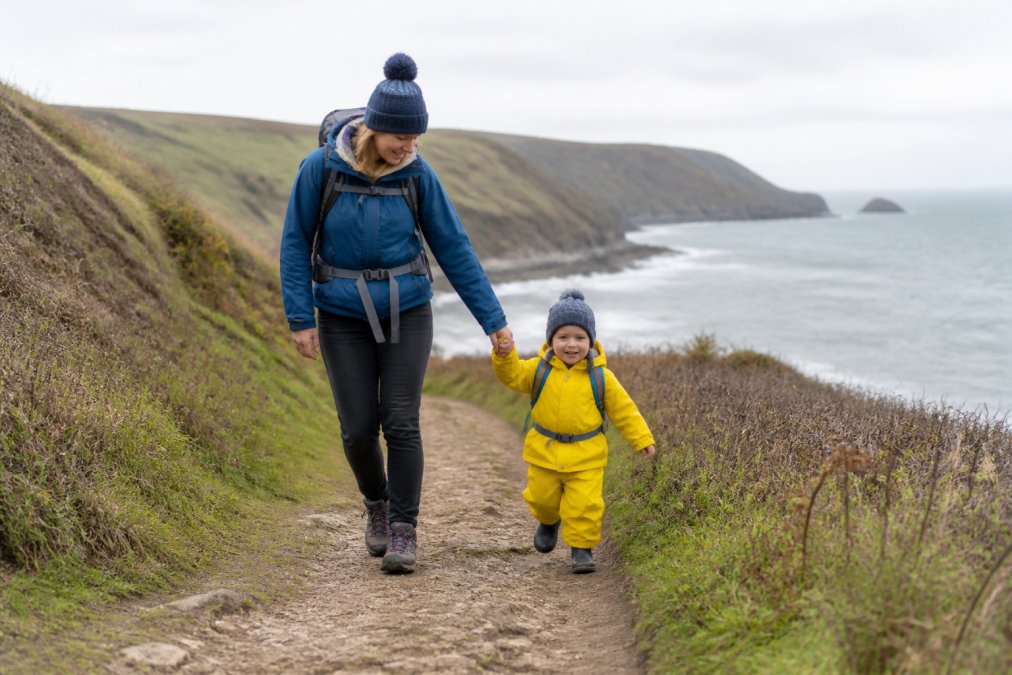
The South West Coast Path near Salcombe is dramatic and beautiful, but coastal paths present specific hazards for toddlers. Cliff edges, loose shale, and sudden weather changes demand extra caution.
Never let your toddler walk unsupervised near cliff edges. Keep them between you and the inland side of the path, or carry them on exposed sections. Coastal paths often have loose or crumbling edges; guide your toddler carefully or carry them if the path is genuinely unstable.
Weather on the coast changes rapidly. Clear skies can turn to rain and wind within minutes. If wind is picking up, your toddler is getting cold, or visibility is dropping, abandon the walk and return to your car.
Weather and Terrain Awareness
Check the forecast the night before and the morning of your walk. Look specifically for wind speed, rainfall, and temperature. Wind above 20 mph makes coastal paths unpleasant for toddlers. Rain on exposed paths creates slipping hazards.
Terrain difficulty varies hugely on the South West Coast Path. Start at the easiest sections and build up. Your toddler's confidence grows with success on manageable terrain. Avoid walking during peak heat; toddlers overheat quickly. Early morning or late afternoon walks are more comfortable in summer. Bring extra water and take frequent shade breaks.
How to Keep Toddlers Engaged on Hikes
A bored toddler becomes miserable and difficult. Make the walk interesting and interactive, not just a means of getting from A to B.
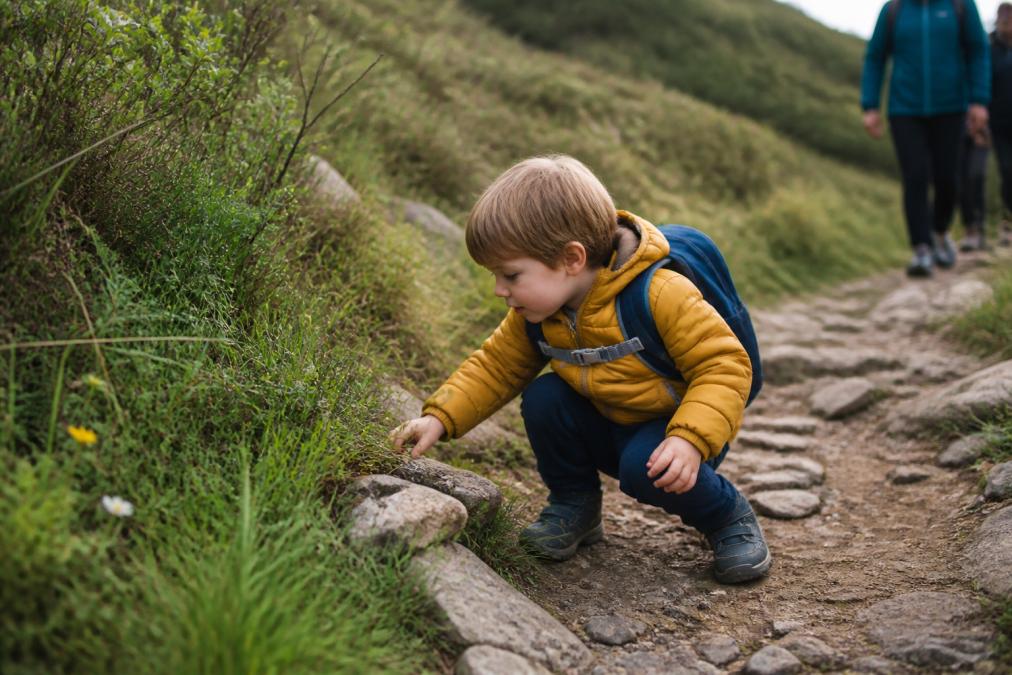
Point out things your toddler finds genuinely interesting. This might be birds, insects, rocks, or water. Let them set the pace and focus. A child fascinated by puddles will learn more from exploring puddles than from you describing coastal geology.
Collect small items. Smooth pebbles, interesting leaves, or pine cones give your toddler something to do and a sense of purpose. Many toddlers will walk further if they're gathering a collection.
Play simple games. Counting birds, spotting colours, or finding specific plants keeps their mind engaged. Make the games age-appropriate.
Take frequent breaks. Toddlers need to process what they're seeing. A five-minute stop gives them time to rest and absorb their surroundings.
Bring a small comfort item or toy. A favourite stuffed animal, a book, or a small toy can be a mood-lifter during rest stops.
Sing or talk as you walk. Familiar songs and conversation make the walk feel social and fun rather than like a chore. Your toddler is more likely to keep moving if you're interacting with them.
The goal isn't to walk a specific distance or complete a route. It's to spend time outdoors with your child in a way that feels positive. If your toddler is happy, engaged, and safe, the walk is a success.
Pace, Duration, and Rest: Getting the Balance Right
Most parents significantly overestimate how far a toddler can walk. A realistic expectation is 1-2 kilometres per hour with frequent stops.
For toddlers aged 18 months to 3 years, plan for 20-40 minutes of actual walking time, with breaks included. A walk that takes an hour total might involve 30 minutes of walking and 30 minutes of stopping to rest, explore, or have snacks.
For toddlers aged 3-5, you might manage 45-60 minutes of actual walking time, again with breaks. Expect the total outing to take 90 minutes to two hours.
Never aim for a specific distance. Instead, set a time limit and be flexible about how far you actually go. A walk where you've turned back after 40 minutes because your toddler is tired is far better than pushing through and ending with a miserable, overtired child.
Rest stops are essential, not optional. Every 15-20 minutes, find a comfortable place to sit. Your toddler gets a chance to recover; you get a chance to check they're not too cold or hot, offer water, and reassess how they're coping. If your child is genuinely struggling, rest longer or turn back.
Watch for signs of fatigue. A toddler who's tired becomes whiny, clumsy, and difficult to manage. They're also at greater risk of accidents. If you see these signs, stop walking and either rest, carry your child, or head back to the car.
Prepare for Common Challenges and Know When to Turn Back
Despite careful planning, things go wrong. Knowing how to respond keeps everyone safe and prevents a minor problem becoming a crisis.
If your toddler refuses to walk, don't force it. Carrying them is fine. Many parents use a combination of walking and carrying, their toddler walks the easy bits and gets carried on steep sections or when tired.
If weather deteriorates, turn back immediately. Don't wait to see if it improves. Wet, windy conditions are genuinely dangerous for toddlers.
If your toddler becomes injured, stop immediately and assess calmly. Minor scrapes and bruises are part of outdoor play; clean them with water and a wipe. If your child is in significant pain, can't walk, or is bleeding heavily, call for help. Ensure you have your phone fully charged and know where you are on the map.
If your toddler becomes distressed or anxious, stop and comfort them. Sit with them, talk calmly, and wait until they've settled. You might then continue gently or head back depending on their state.
Know when to abandon the walk entirely. If your toddler is genuinely miserable, the weather is dangerous, you're lost, or you're running out of daylight, turn back. There's no shame in this. Your toddler's wellbeing and your family's safety always come first.
Hiking with toddlers safely transforms what could be stressful into something genuinely enjoyable for your whole family. The South Devon coast near Salcombe offers beautiful, accessible walking routes perfect for building your child's confidence and love of the outdoors. Start with short, manageable walks on well-maintained paths, dress appropriately for the weather, and prioritise your toddler's comfort and safety over distance or pace. When you're ready to extend your walking holidays, Spring Barn at Bolberry Court provides the ideal base, spacious, child-friendly accommodation for up to 10 people with a fully enclosed garden where your family can relax after days exploring the coastal paths. booking page to secure your stay, or contact page for more information. With proper preparation and realistic expectations, hiking with young children becomes a cherished part of family life.
Frequently Asked Questions
Q: What age can a toddler start hiking safely?
A: Most toddlers can begin short, gentle walks from around 18 months, though readiness varies by child. Before two years, many parents use carriers or pushchairs on easier terrain. From two to three years, toddlers can manage short walks of 20-30 minutes on flat, well-maintained paths. By three to four years, many are ready for slightly longer hikes of up to an hour. Always assess your individual child's fitness, attention span, and comfort level before attempting longer trails.
Q: What toddler hiking gear essentials should I pack?
A: Essential items include a well-fitted child carrier or backpack for when they tire, waterproof and breathable clothing in layers, sturdy walking shoes with good grip, a sun hat and sunscreen, a reusable water bottle, healthy snacks, a small first aid kit, nappies or wipes, and a lightweight emergency blanket. Consider a harness or wrist link for added safety on busy or exposed paths. Pack everything in a comfortable rucksack that distributes weight evenly across your shoulders and hips.
Q: How long should a hike be with a toddler?
A: Start with 15-20 minutes for children under two, progressing to 30-45 minutes by age three or four. Most toddlers have a limited attention span and tire quickly, so shorter, engaging walks are better than long endurance hikes. Build duration gradually and always include frequent rest breaks. Watch for signs of fatigue such as whining, dragging feet, or loss of interest, and be prepared to cut the walk short or use a carrier if needed.
Q: Are coastal paths near Salcombe suitable for toddlers?
A: Many coastal paths in the area offer toddler-friendly sections, particularly lower-level routes with clear, well-maintained surfaces and minimal steep drops. However, exposed cliff edges and uneven terrain require constant supervision and careful route selection. Choose flatter stretches away from sheer drops, avoid walking during poor weather, and never leave a toddler unattended near water or cliff edges. Start with shorter, easier sections of the South West Coast Path or local beach walks before attempting more challenging terrain.