
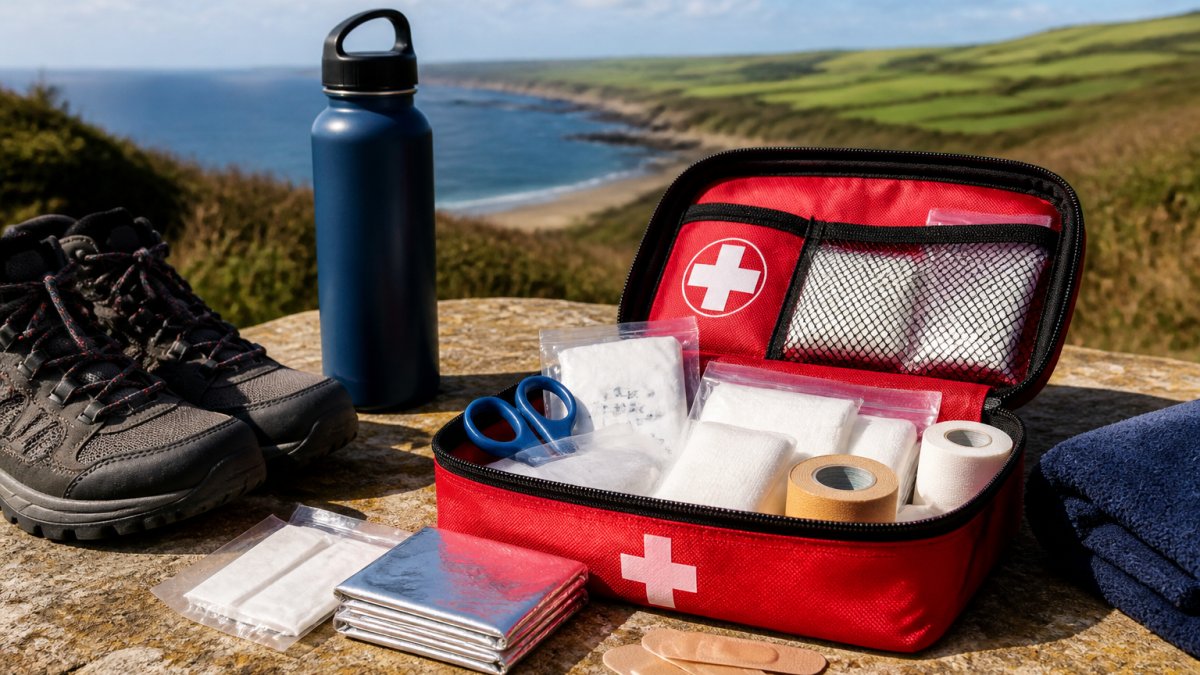
9 Essential Items for Your Family Hiking First Aid Kit
27 October 2026
Last Updated: 26 October 2026
Quick Summary
A family hiking first aid kit is essential for addressing trail-specific injuries like blisters, minor cuts, insect bites, and twisted ankles that differ from home accidents. A well-stocked family hiking first aid kit should include blister plasters, antiseptic wipes, assorted plasters, bandages, pain relief, antihistamines, tweezers, antibiotic ointment, and sunscreen to keep your walk enjoyable and safe.
- Blisters are the number-one complaint on family hikes and are almost entirely preventable with blister prevention tape applied before the walk.
- A family hiking first aid kit should fit in a small waterproof pouch kept accessible in your rucksack, not buried at the bottom.
- Coastal walks require extra preparation including checking tide times, wearing footwear with good grip, dressing in layers, and bringing extra water.
- Antiseptic wipes clean cuts without needing water on the trail, making them essential when miles from a tap.
- Tweezers remove splinters and ticks properly, preventing infection and disease transmission on the trail.
Table of Contents
- Why a Dedicated Family Hiking First Aid Kit Matters
- 9 Essential Items for Your Family Hiking First Aid Kit
- Building a Children's Hiking First Aid Kit Checklist
- What to Include in a First Aid Kit for Day Walks
- Blister Treatment for Hiking: Prevention and Relief
- Packing and Carrying Your Kit on the Trail
- Preparing Your Family for Safe Coastal Walks
- Frequently Asked Questions
Why a Dedicated Family Hiking First Aid Kit Matters
A family hiking first aid kit is different from a standard first aid kit. It needs to address the specific injuries and emergencies that happen on trails, blisters, minor cuts, insect bites, and the occasional twisted ankle, rather than home accidents. When you're miles from a road with young children, the right kit makes the difference between a minor inconvenience and a real problem.
Most families either overpack (carrying a full medical cabinet) or underpack (hoping nothing happens). The sweet spot is knowing which items actually work in the field and which ones sit unused.
The reality is simple: children get injured on trails. They step on rocks, fall on roots, blister from new boots, or get stung by wasps. You can't prevent every mishap, but you can be ready for the common ones. A well-stocked family hiking first aid kit takes the panic out of these moments and keeps your walk enjoyable for everyone.
9 Essential Items for Your Family Hiking First Aid Kit
The nine items below cover the most common trail injuries and complaints. Each one earns its place by solving a real problem that happens regularly on family walks.
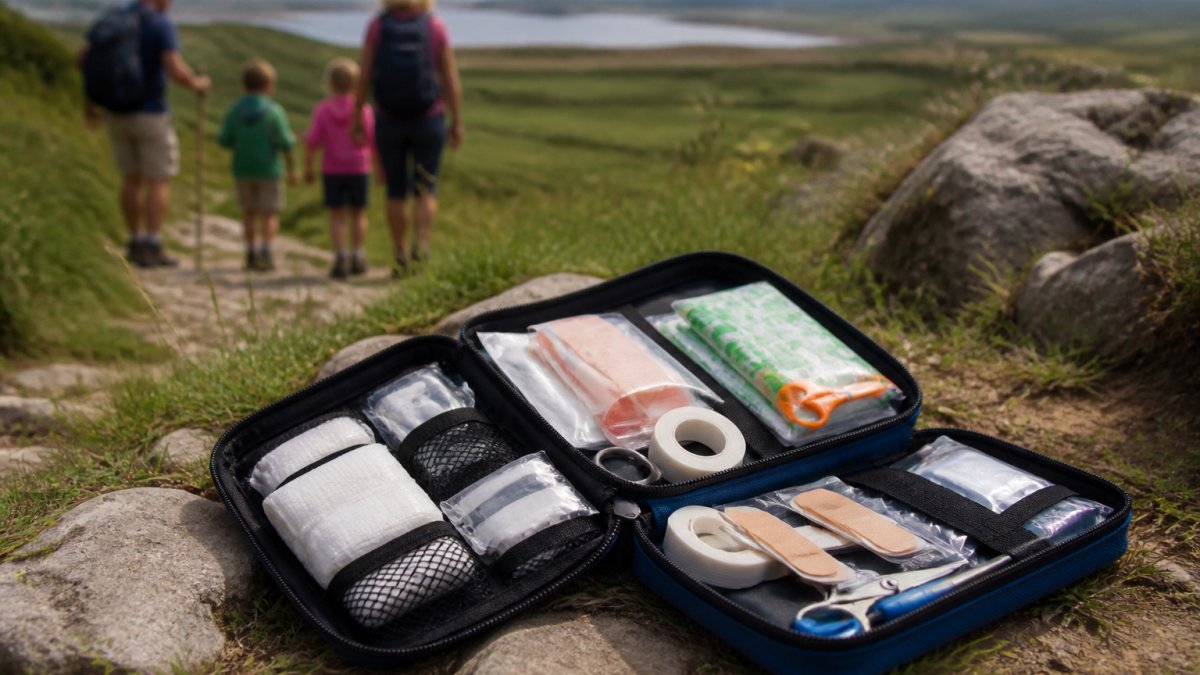
1. Blister plasters and prevention tape Blisters are the number-one complaint on family hikes.
2. Antiseptic wipes Dirt and bacteria on trail wounds cause infections. A pack of individual antiseptic wipes cleans cuts and scrapes without needing water.
3. Assorted plasters and gauze Minor cuts and scrapes happen constantly.
4. Triangular bandage or elastic wrap A twisted ankle or knee strain needs support.
5. Pain relief tablets Paracetamol or ibuprofen tablets help with headaches, minor fever, or the aches that come after a long walk.
6. Antihistamine tablets Insect bites and stings are common on trails, especially in warmer months. An antihistamine tablet reduces itching and swelling.
7. Tweezers Splinters and ticks are part of trail life.
8. Antibiotic ointment After cleaning a wound, antibiotic ointment (like Savlon or similar) prevents infection and keeps the wound moist so it heals faster.
9. Sunscreen and insect repellent Prevention beats treatment. A small tube of high-SPF sunscreen and a bottle of insect repellent protect against the most common trail discomforts.
These nine items address the most common trail injuries and complaints your family will encounter on hikes.
| Item | Purpose | Key benefit |
|---|---|---|
| Blister plasters and prevention tape | Prevent and treat blisters | Stops the number-one complaint on family hikes |
| Antiseptic wipes | Clean cuts and scrapes | Works without needing water on the trail |
| Assorted plasters and gauze | Cover minor cuts and grazes | Waterproof plasters stay on when children sweat |
| Triangular bandage or elastic wrap | Support sprains and strains | Handles the most serious injuries on day walks |
| Pain relief tablets | Treat headaches and aches | Child-appropriate doses available |
| Antihistamine tablets | Reduce itching from bites | Prevents children scratching bites until they bleed |
| Tweezers | Remove splinters and ticks | Prevents infection and disease transmission |
| Antibiotic ointment | Prevent infection in wounds | Keeps wounds moist for faster healing |
Building a Children's Hiking First Aid Kit Checklist
Young children need a first aid kit tailored to their needs and the injuries they're most likely to suffer. How to Hike with Toddlers Safely: A Family Guide covers preparation strategies beyond first aid, including pacing and rest breaks for very young walkers. The items above form the foundation, but the checklist below ensures you've thought through the specifics.
Use this checklist when packing for a family hike:
- Blister prevention tape and blister plasters (at least 3-4)
- Antiseptic wipes (at least 10 individual sachets)
- Small plasters (assorted sizes, at least 15)
- Gauze pads (at least 4 sterile pads)
- Triangular bandage or elastic wrap
- Child-appropriate paracetamol or ibuprofen
- Child-safe antihistamine tablets
- Tweezers (small, stainless steel)
- Antibiotic ointment (small tube)
- Sunscreen (SPF 30+)
- Insect repellent (child-safe formula)
- Waterproof pouch or bag to hold everything
- Wet wipes (for cleaning hands before treating wounds)
- Emergency contact numbers written on a card
For younger children (under 5), consider adding:
- Nappy rash cream (useful for any skin irritation)
- Hydrocortisone cream (for itchy insect bites)
- Paracetamol suspension (liquid form for very young children)
For older children (8+), add:
- Blister treatment that hardens (like Compeed Advanced)
- Electrolyte tablets (for longer walks on hot days)
How to Hike with Toddlers Safely: A Family Guide covers preparation strategies beyond first aid, including pacing and rest breaks for very young walkers.
What to Include in a First Aid Kit for Day Walks
Day walks, those lasting three to five hours, have different demands than longer expeditions. You're close enough to civilisation that you don't need everything, but far enough away that you can't pop home for a plaster.
A day-walk first aid kit should be smaller and lighter than a full hiking kit, but it must cover the injuries most likely to happen in those three to five hours. Focus on blister prevention, minor cuts, and comfort items.
Essential items for day walks:
- Blister prevention tape and plasters (most important)
- Antiseptic wipes
- Assorted plasters
- Elastic wrap or triangular bandage
- Pain relief tablets
- Antihistamine
- Tweezers
- Sunscreen and insect repellent
Skip the heavy items like full gauze pads or large bandages. A day walk stays close enough to help that you don't need to manage a serious wound for hours. The kit should fit in a small pouch that takes up minimal space in your rucksack.
Many families choose to keep a day-walk kit permanently packed, ready to grab when heading out on a weekend walk in South Devon. This removes the friction of deciding what to bring and ensures you never leave home unprepared.
Blister Treatment for Hiking: Prevention and Relief
Blisters are the biggest complaint on family hikes, and they're almost entirely preventable. The key is understanding how they form and acting before they appear.
Blisters form from repeated friction and heat. A child's heel rubbing inside a new boot, or a toe sliding forward with each downhill step, creates the pressure and moisture that cause blistering.
Prevention is far easier than treatment. Start with proper footwear: boots or trail shoes that fit well, with thick socks designed for hiking (merino wool or technical synthetics, not cotton).
Before a walk, identify hot spots, places where the shoe rubs or feels tight. Apply blister prevention tape (like Leukotape or Compeed's prevention range) to these areas. The tape reduces friction and keeps skin dry.
If a blister forms during a walk, treat it immediately. Stop, remove the boot, and apply a blister plaster.
For children, prevention tape applied before the walk is the single most effective blister strategy. Most children won't complain until a blister is already forming, so proactive taping saves your walk.
Packing and Carrying Your Kit on the Trail
How you pack your first aid kit matters as much as what's in it. A kit that's hard to access when you need it is nearly useless.
Use a waterproof pouch or small dry bag. This keeps everything dry, organised, and easy to find. Zip-lock bags work in a pinch, but a proper pouch with compartments is worth the small investment. Label compartments: blister supplies, wound care, pain relief, and so on.
Keep the kit accessible, not buried at the bottom of your rucksack. A pocket on the outside of your pack, or in the top compartment, means you can reach it without removing your pack.
Pack a small notebook and pen to write down emergency contact details. If mobile signal is poor (common in rural South Devon), you need this information written down. Include your GP's number, the nearest hospital, and emergency services.
For coastal walks near Bolberry, Nr Salcombe, South Devon, consider adding a small waterproof bag inside your main pouch. Salt water and sand are hard on wounds, and a waterproof barrier keeps your first aid supplies dry if you wade in streams or walk along beaches.
Spring Barn at Bolberry Court sits within walking distance of some of South Devon's most beautiful coastal paths. Spring Barn makes an ideal base for families planning regular coastal hikes, you'll have a comfortable, warm space to return to after a day on the trails, with facilities for cleaning up and treating any minor injuries properly.
Preparing Your Family for Safe Coastal Walks
Coastal walks add specific hazards that inland trails don't have: uneven ground, tidal changes, slippery rocks, and exposure to wind and weather. Preparation beyond first aid is essential.
Check the tide times before any coastal walk. Best Time for Coastal Hiking: A Seasonal Guide covers seasonal conditions and timing for safer family outings along the South West Coast Path.
Wear proper footwear with good grip. Coastal rocks are slippery, especially when wet or covered in algae. Trail shoes with aggressive tread patterns grip better than smooth-soled shoes.
Dress in layers. Coastal winds are stronger and colder than inland areas, and weather changes quickly.
Bring extra water. Salt air and wind dehydrate faster than you'd expect, and children don't always tell you they're thirsty until they're already dehydrated.
Best Time for Coastal Hiking: A Seasonal Guide covers seasonal conditions and timing for safer family outings along the South West Coast Path.
Best Coastal Walks Near Hope Cove: 7 Routes to Explore provides specific local routes with practical details for family hikes in the area.
Before heading out on a coastal walk, ensure everyone in the family is comfortable with the distance and difficulty.
A well-prepared family hiking first aid kit removes the anxiety from trail days.
Pack your kit, check it before each walk, and replace items as you use them.
Frequently Asked Questions
What should be in a family hiking first aid kit?
An essential family hiking first aid kit should include plasters and bandages for cuts, antiseptic wipes or cream, blister treatments, pain relief tablets, antihistamines for insect bites, tweezers for splinters, a small triangular bandage, and any personal medications. Include items suited to your children's ages and any known allergies. Keep everything in a waterproof, lightweight pouch that's easy to access during walks.
How do I make a first aid kit suitable for children?
A children's hiking first aid kit should focus on common minor injuries: small plasters in fun designs (children respond better), blister pads, antiseptic wipes, and age-appropriate pain relief. Include a small notebook to distract younger children if they're upset, and consider antihistamines for allergic reactions to insect bites. Teach older children what's in the kit and basic first aid so they feel involved and less frightened if an injury occurs.
How should I treat blisters while hiking?
Stop early if you notice rubbing or discomfort. Blister treatment for hiking starts with prevention: ensure boots are well-fitted and worn in before the walk. If a blister forms, clean the area with antiseptic wipes, apply a specialised blister pad or moleskin, and cover with a plaster. Keep feet dry and change socks if they become damp. Avoid popping blisters on the trail; let them heal naturally or seek medical advice after your walk if they're severe.
What's the minimum first aid kit for a day walk?
A first aid kit for day walks can be compact: a small selection of plasters and bandages, antiseptic wipes, blister pads, tweezers, and any personal medications. Add pain relief tablets and an antihistamine if space allows. Pack it in a small waterproof pouch that fits in a rucksack pocket. Even on short walks near Spring Barn's proximity to the South West Coast Path, carrying basic supplies means you're prepared for minor incidents without carrying unnecessary weight.
