
Self-Catering for Groups: Why It's the Smart Choice
12 July 2026
Table of Contents
- Why Choose Self-Catering for Groups: The Complete Picture
- Cost Savings and Budget Management for Group Holidays
- Privacy, Flexibility and Freedom in Your Holiday Schedule
- Home-Away-From-Home Comfort and Amenities
- Dining Options and Dietary Control for Your Group
- Self-Catering Checklist for Large Groups
- Group Travel Meal Planning Ideas and Strategies
- Cost of Self-Catering vs Hotels for Groups: The Real Comparison
Last Updated: July 12, 2026
Self-Catering for Groups: Why It's the Smart Choice
When planning a getaway for a large group, why choose self catering for groups over traditional hotel arrangements? The answer lies in a simple shift in perspective, self-catering accommodation gives your group genuine freedom, privacy, and financial control that hotels simply cannot match. At Spring Barn at Bolberry Court, we've observed firsthand how groups transform their holiday experience when they choose self-catering options, moving from the constraints of fixed meal times and shared facilities to the comfort of their own space.
Self-catering for groups has become increasingly popular because it addresses real pain points that hotels create: inflexible dining schedules, premium costs for every additional person, and the loss of intimate group time. This guide explores the practical reasons why self catering for groups makes sense for families, friends, and organisations looking to maximise both enjoyment and value during their time together.
Cost Savings and Budget Management for Group Holidays
The financial advantage of self-catering accommodation is one of the most compelling reasons groups choose this approach. When you rent a single property for your entire party, you're dividing accommodation costs across everyone, which typically results in significantly lower per-person expenses compared to booking multiple hotel rooms.
Consider the practical breakdown: a hotel charges per room, meaning a group of eight people might need four rooms at £100-150 each per night. A self-catering property accommodating the same group costs a fixed nightly rate, often far less when divided by eight people. Beyond accommodation, self-catering eliminates the restaurant markup that hotels build into their food and beverage pricing. You purchase groceries at standard retail prices rather than paying 200-300% markups on meals eaten within the property.
Meal planning becomes genuinely affordable when your group prepares food together. Breakfast costs pennies per person when you buy bread, eggs, and milk from a local shop rather than ordering room service. Group dinners, which could cost £20-30 per person at a restaurant, cost £5-8 per person when prepared at home with shared ingredients.
Many groups find that laundry facilities included in self-catering properties save additional costs, no need for expensive hotel laundry services or purchasing extra clothing for longer stays. For a week-long group holiday, these savings accumulate quickly, often totalling hundreds of pounds that could be redirected toward activities or experiences.
Privacy, Flexibility and Freedom in Your Holiday Schedule
Self-catering accommodation provides something hotels fundamentally cannot: complete control over your daily rhythm. Your group sets its own schedule without accommodating hotel check-in times, breakfast service windows, or noise restrictions that affect shared facilities.
This flexibility transforms group dynamics. Early risers can enjoy coffee and the sunrise without waiting for a restaurant to open. Night owls can socialise late without disturbing other guests. Children can nap on their own schedule rather than being forced into rigid routines. Your group's natural rhythms become the holiday rhythm, not the hotel's operational requirements.
Privacy extends beyond scheduling. In a self-catering property, your group enjoys exclusive use of the entire space, no shared lobbies, corridors, or dining areas where you encounter other guests. Conversations remain private. Children can play freely. You control the noise level, music, and atmosphere entirely. This exclusivity matters particularly for multi-generational groups where different family branches want time together without strangers present.
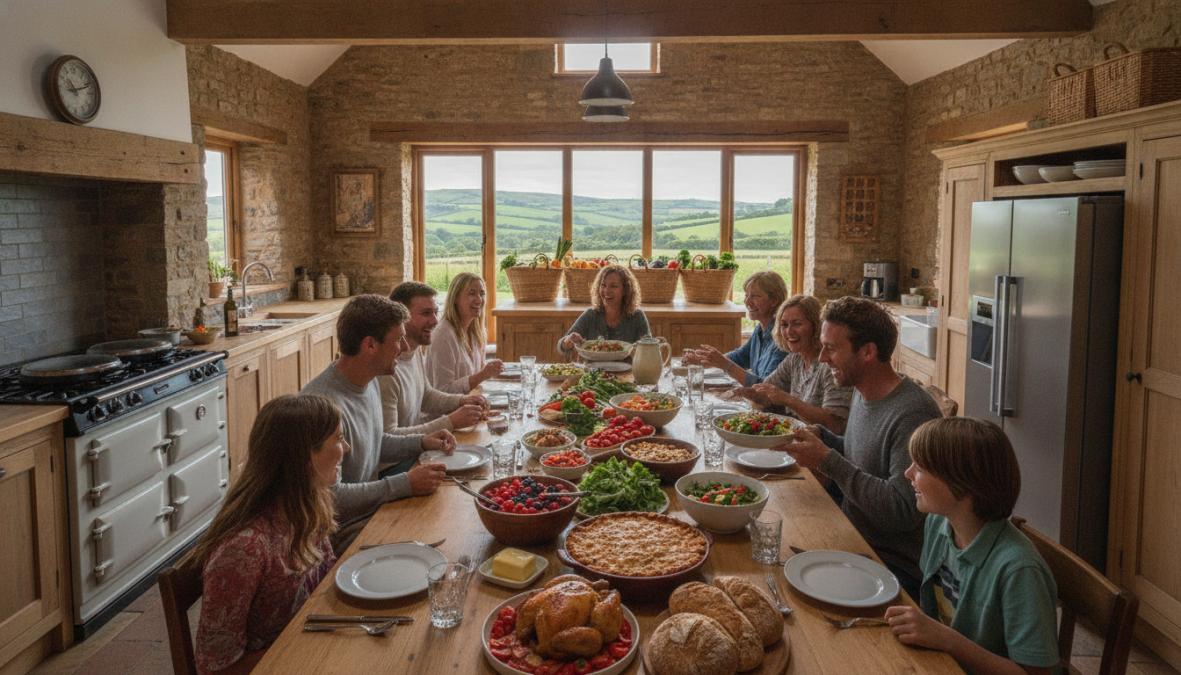
The kitchen becomes a genuine gathering space rather than something you visit for a quick meal. Your group can prepare food together, which often becomes one of the most memorable parts of a holiday. Recipes get shared, stories emerge during cooking, and the informal nature of meal preparation creates connection that formal restaurant dining never achieves.
Home-Away-From-Home Comfort and Amenities
Self-catering properties offer genuine comfort that extends beyond what hotels provide. A well-equipped property includes a full kitchen with proper cooking equipment, comfortable living spaces where your entire group can gather, and bedrooms that feel like home rather than institutional hotel rooms.
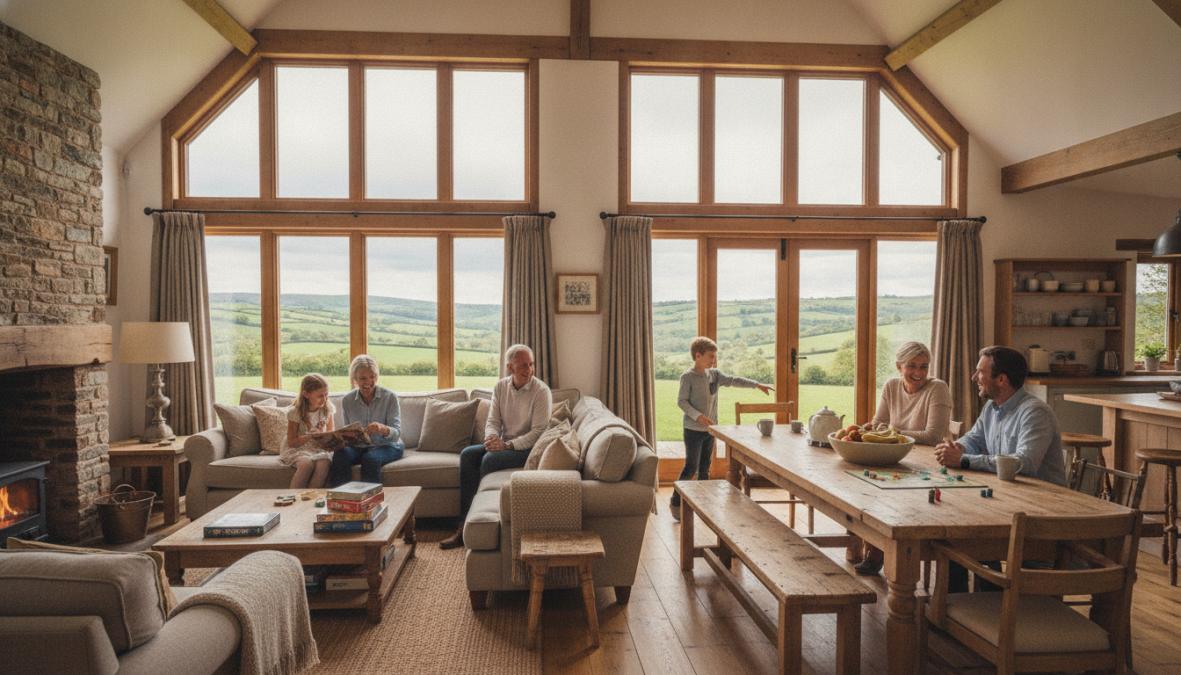
At Spring Barn at Bolberry Court, guests experience luxury self-catering with amenities designed for group comfort: underfloor heating ensures warmth throughout colder months, a log burner creates atmosphere for evening gatherings, and an electric vehicle charging station caters to modern travel needs. The fully enclosed garden provides safe outdoor space for children and groups to relax without venturing onto public roads.
The difference between hotel amenities and self-catering comfort becomes apparent in small details. You have a full refrigerator, not a minibar. You control the heating and lighting completely. You can make hot drinks whenever you want. Laundry facilities mean you're not restricted to the clothes you packed. These conveniences accumulate into genuine comfort that transforms a holiday from "staying somewhere" into "living somewhere."
Many self-catering properties include entertainment amenities, board games, books, televisions, and outdoor equipment, that create options for group activities during downtime. This matters particularly when weather forces indoor time or when your group includes people with varying interests and energy levels.
Dining Options and Dietary Control for Your Group
One of the most practical advantages of self-catering centres on dietary flexibility. Hotels offer fixed menus that may not accommodate allergies, intolerances, preferences, or cultural dietary requirements. A self-catering property lets your group eat exactly what suits everyone.
This flexibility proves invaluable for groups with diverse needs. Vegetarians, vegans, those with gluten sensitivities, and people following specific diets can all eat well without compromising or paying premium prices for special requests. Parents of young children can prepare familiar foods that children actually enjoy rather than navigating children's menus. Your group controls ingredients completely, ensuring quality and freshness.
Meal times become genuinely social occasions. Rather than individuals eating at different times in a restaurant, your group gathers around a shared table. Conversations flow naturally. Children see adults modelling healthy eating. Recipes get shared and discussed. The informality of home cooking creates space for genuine connection that formal dining cannot replicate.
Grocery shopping itself becomes a group activity. Local shops, farmers markets, and regional specialities introduce your group to the area's food culture. You discover local produce, regional specialities, and authentic ingredients that restaurants often overlook. This exploration deepens your connection to the destination beyond standard tourist experiences.
Self-Catering Checklist for Large Groups
Successful self-catering holidays require basic preparation. This checklist helps group organisers ensure nothing essential gets overlooked.
| Preparation Area | Key Items | Timing |
|---|---|---|
| Accommodation | Confirm bed count, kitchen equipment, laundry facilities, heating/cooling | 8 weeks before |
| Dietary needs | Collect dietary requirements, allergies, preferences from all guests | 6 weeks before |
| Shopping | Plan meals, create shopping lists, arrange delivery or shopping trips | 2 weeks before |
| Cooking schedule | Assign meal preparation duties, discuss dietary preferences, plan group meals | 1 week before |
| House orientation | Confirm location of kitchen equipment, heating controls, emergency contacts | Upon arrival |
| Shared expenses | Establish payment system for shared groceries and household supplies | Before arrival |
Before booking, confirm that your chosen property has adequate kitchen equipment for your group size. A property sleeping eight people needs multiple burners, a large refrigerator, sufficient crockery and cutlery, and proper cooking utensils. Properties designed for families often lack the capacity to feed larger groups efficiently.
Discuss dietary requirements with all guests well in advance. Collect information about allergies, intolerances, vegetarian or vegan preferences, and any other dietary needs. This prevents shopping surprises and ensures everyone can eat well throughout the holiday.
Establish clear expectations about shared expenses before arrival. Will groceries be split equally? Will someone manage a shared kitty? Will people buy their own items? Clear communication prevents awkward financial conversations during the holiday.
Group Travel Meal Planning Ideas and Strategies
Effective meal planning transforms self-catering from potentially chaotic into genuinely enjoyable. Strategic planning ensures variety, accommodates dietary needs, and prevents the "what's for dinner?" stress that derails group holidays.
Start with a simple meal template: designate which days feature group meals and which allow people to fend for themselves. Most groups find that 4-5 shared meals per week creates connection without overwhelming the cooking roster. Breakfast and lunch often work better as flexible, self-serve meals where people eat when they're ready.
Create a simple meal plan before arrival. Assign one person per day to oversee that day's main meal. This person doesn't cook alone, others assist, but they hold responsibility for planning and execution. Rotate this duty so no single person bears all cooking responsibility. Groups with 6-8 people typically find that each person cooks once per week, which feels manageable.
Build flexibility into your plan. Identify 2-3 backup meals that require minimal preparation for days when energy is low or plans change. Pasta-based dishes, stir-fries, and slow-cooker meals work well as flexible options that accommodate most dietary needs.
Shop strategically. Purchase shelf-stable items (pasta, rice, tinned goods, spices) before arrival. Buy fresh produce in smaller quantities, shopping mid-week rather than once at the start. This prevents waste and keeps food fresher throughout your stay. Many groups find that assigning one person to manage shopping prevents duplication and keeps costs controlled.
Consider the logistics of your location. If your property is near good shops and markets, you have flexibility to shop as needed. If you're remote, you'll need more comprehensive initial shopping. Spring Barn at Bolberry Court's location in Devonshire provides easy access to local shops and markets, giving groups flexibility in their provisioning approach.
Cost of Self-Catering vs Hotels for Groups: The Real Comparison
When comparing actual costs, self-catering typically delivers 30-50% savings compared to equivalent hotel accommodation for groups of four or more people. This advantage increases with group size and length of stay.
A concrete example illustrates the difference. A group of eight people staying five nights:
Hotel scenario: Four rooms at £120 per night = £2,400 accommodation. Meals averaging £25 per person daily = £1,000. Total: £3,400.
Self-catering scenario: Property at £400 per night = £2,000 accommodation. Groceries averaging £8 per person daily = £320. Total: £2,320. Savings: £1,080.
This comparison assumes mid-range hotels and reasonable grocery shopping. Premium hotels increase the hotel cost significantly. Careful grocery shopping can reduce self-catering costs further. The savings become more dramatic for longer stays and larger groups.
Beyond direct costs, self-catering eliminates hidden expenses that hotels create. Tipping, room service charges, minibar costs, and premium beverage pricing add up quickly in hotels. Self-catering removes these temptations entirely.
The comparison also shifts when considering what you receive. Hotels provide accommodation and meals, but nothing else. Self-catering provides accommodation plus the space, facilities, and privacy to genuinely live as a group. This qualitative difference, the ability to gather together, cook together, and create shared experiences, adds value that pure cost comparison misses.
Why Groups Choose Self-Catering: The Broader Picture
Self-catering for groups represents a fundamental shift from being served to being self-sufficient. This shift brings genuine advantages across multiple dimensions: financial savings, dietary flexibility, privacy, and the ability to create shared experiences that hotels cannot facilitate.
The decision ultimately reflects what your group values most. If cost matters most, self-catering wins clearly. If flexibility and privacy matter, self-catering transforms your experience. If dietary diversity exists within your group, self-catering removes friction entirely. If you want genuine connection and shared activities, the informal nature of group cooking and meals in a home environment creates opportunities that formal hotel services never provide.
Planning a group holiday requires balancing convenience, cost, and the kind of experience you want to create together. Self-catering accommodation addresses all three, particularly when you choose a property designed with groups in mind. Spring Barn at Bolberry Court offers exactly this combination: luxury self-catering accommodation for groups up to ten people, with fully equipped kitchen facilities, comfortable living spaces, and a location that provides both privacy and easy access to the dramatic South West coast path and local beaches. The property's underfloor heating and log burner ensure comfort in any season, whilst the fully enclosed garden provides safe outdoor space for group activities. Explore group accommodation options at Spring Barn at Bolberry Court to see how self-catering can transform your next group holiday, or contact the team directly for group booking enquiries to discuss your specific needs and dates.
Frequently Asked Questions
What are the main advantages of self-catering for groups?
Self-catering for groups offers significant cost savings compared to dining out for every meal, complete privacy and exclusive use of your accommodation, and the freedom to set your own schedule. You gain independence in meal planning, can accommodate dietary requirements easily, and enjoy the convenience of laundry facilities and domestic amenities. Families and multi-generational groups particularly benefit from the spacious living areas that encourage bonding and socialising together.
How much can a group save by self-catering instead of staying in a hotel?
Savings depend on your group size, location, and dining habits. Self-catering eliminates restaurant and room service costs, allowing groups to purchase local produce and prepare meals together. Rather than estimating figures, contact Spring Barn at Bolberry Court directly to discuss your group's specific needs and receive a tailored quote. The larger your group, the more dramatic the per-person savings typically become.
What should be included in a self-catering checklist for large groups?
A comprehensive self-catering checklist for large groups should include: verifying kitchen equipment and appliance availability, confirming sleeping arrangements and bedroom count, checking laundry facilities, reviewing outdoor space and gardens, confirming parking provisions, checking accessibility features, and confirming Wi-Fi availability. You should also plan your meal rota in advance, create a shopping list based on dietary requirements, and arrange who will handle cooking duties. Spring Barn at Bolberry Court provides fully equipped accommodation for groups up to 10 people.
How do I plan meals and manage cooking for a large group?
Successful group travel meal planning ideas include: assigning cooking duties on a rotation basis, planning menus in advance to accommodate dietary requirements, shopping for local produce at nearby markets, and preparing some meals together as a group activity. Consider designating meal times that work for everyone, preparing simple dishes that multiple people can help with, and having backup options for dietary preferences. Spring Barn's spacious kitchen facilities and fully enclosed garden provide an ideal setting for group meal planning and preparation.