
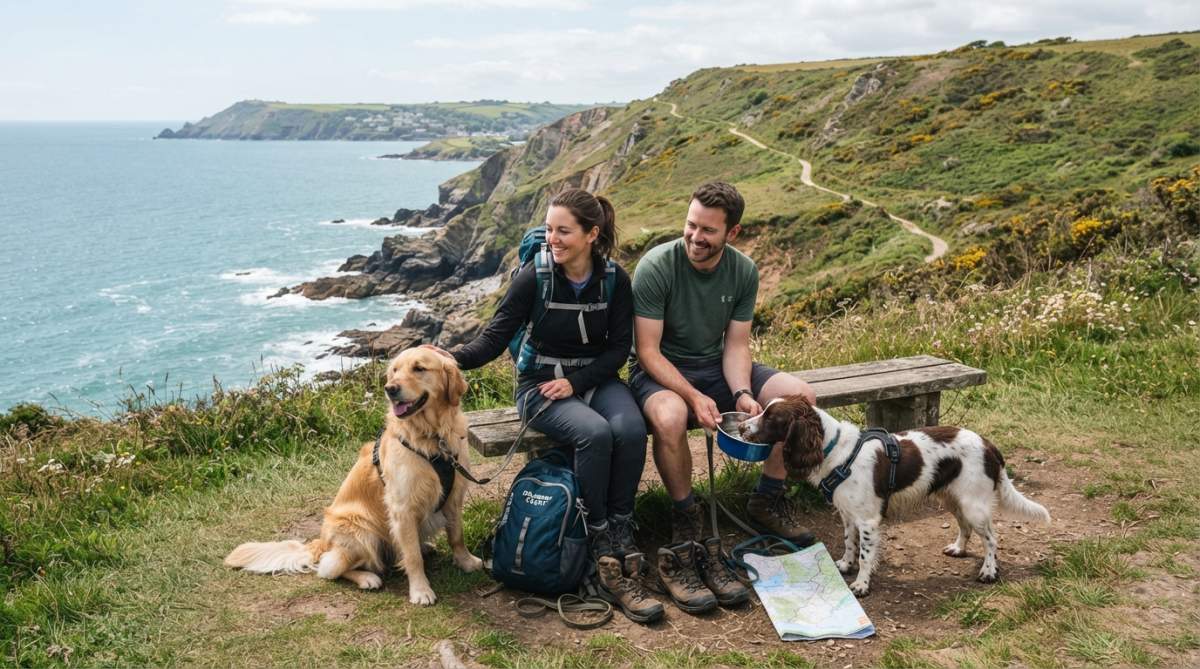
Dog Friendly Holidays South West Coast Path: Your Complete Guide
27 July 2026
Table of Contents
- Planning Your Dog Friendly Holidays on the South West Coast Path
- Dog Friendly Accommodation South West Coast Path: Finding Your Base
- Best Dog Friendly Beaches South West Coast Path: Where to Swim and Play
- South West Coast Path Dog Restrictions: What You Need to Know
- Dog Friendly Pubs and Cafés Along the South West Coast Path
- Safety Tips for Dogs on the Coastal Trail
- What to Pack for Your Dog Friendly Holiday
- Best Regions for Dog Walking: Cornwall, Devon and Somerset
Dog Friendly Holidays South West Coast Path: Your Complete Guide
Last Updated: July 27, 2026
Planning Your Dog Friendly Holidays on the South West Coast Path
The South West Coast Path is a National Trail stretching across Devon, Cornwall, and Somerset. It's one of the UK's most spectacular long-distance walks, hugging dramatic cliffs, sandy beaches, and hidden coves.
Coastal terrain presents unique challenges: sharp rocks underfoot, saltwater exposure, tidal restrictions on certain beaches, and sudden weather changes. Dogs' paws can be cut by shale and broken shells. Salt water irritates their skin.
The best dog friendly holidays start with understanding what your dog can realistically handle. A five-year-old Labrador built for endurance will manage 12 miles across coastal terrain. A senior Spaniel might manage 6 miles comfortably. A small breed like a Dachshund may struggle with steep ascents and descents.
Understanding the 630-mile National Trail
The South West Coast Path officially runs 630 miles from Minehead in Somerset to South Haven Point near Poole in Dorset. Most people tackle sections, typically 20-40 miles over a week-long holiday.
The trail follows the coastline closely, creating both beauty and challenge. You're walking on cliff edges, descending steep valleys (called "combes"), crossing beaches, and navigating through coastal villages. The elevation changes are constant.
For dogs, this means varied terrain throughout each day. Morning might bring soft sand and beach walking. By afternoon, you're on rocky coastal paths with steep drops. Beach walking is typically easier for dogs than cliff-top sections, but tidal patterns matter enormously. Many beaches are only accessible at certain tide times.
Why Dogs Thrive on Coastal Walking Holidays
Dogs genuinely enjoy structured walking holidays. The combination of new scents, varied terrain, and extended time with their owner creates different stimulation than daily neighbourhood walks.
Coastal environments are particularly enriching. Salt air carries scent information from miles away. Seabirds, rabbits, and other wildlife leave traces everywhere. Rock pools contain small creatures. Many owners report that their dogs sleep deeper and longer after coastal walking.
The rhythm of a walking holiday suits dogs. Unlike busy holidays rushing between attractions, a coastal walk creates predictability. Wake, walk, lunch, walk, rest. Dogs thrive on routine.
Dog Friendly Accommodation South West Coast Path: Finding Your Base
Your choice of accommodation determines whether your holiday is enjoyable or exhausting. A cottage without secure fencing, poor heating, or limited space will make dog management difficult.
What to Look For in Dog-Friendly Holiday Homes
Secure garden or enclosed outdoor space. This is non-negotiable. Your dog needs somewhere to toilet without you holding a lead for an hour every morning. A "secure garden" should mean fencing at least 1.2 metres high, no gaps under gates, and no escape routes.
Kitchen equipment that actually works. You'll be cooking for people and dogs. You need a proper cooker, sharp knives, and enough counter space.
Comfortable beds and good heating. Dogs sleep on furniture. You need sofas that are actually comfortable and beds that don't sag. For coastal holidays, heating matters enormously. Coastal properties are damp. A log burner or underfloor heating prevents the bone-chilling dampness that makes everyone miserable.
Direct or very close access to the trail. If the property is more than a 10-minute walk from the trail, you're wasting 20+ minutes daily just getting to and from your starting point.
Space for your group. If you're bringing multiple people or multiple dogs, the property needs to genuinely accommodate everyone without feeling cramped.
| Accommodation Feature | Why It Matters |
|---|---|
| Secure garden | Dogs need unsupervised toilet access |
| Kitchen equipment | Meal prep for groups takes time |
| Heating system | Coastal damp is unavoidable |
| Trail access | Saves 20+ minutes daily |
| Bedroom count | Families need personal space |
Spring Barn at Bolberry Court: Luxury with Convenience
Spring Barn at Bolberry Court is a luxury barn conversion in Devonshire that accommodates up to 10 people. It's specifically designed for families and large groups who want comfort without compromise.
The property sits in the peaceful hamlet of Bolberry, moments away from the South West Coast Path and local beaches. The barn conversion includes multiple bedrooms, a fully equipped kitchen, underfloor heating throughout, a log burner for coastal evenings, and a fully enclosed garden where dogs can move freely. There's also EV charging on-site.
What separates Spring Barn from generic holiday rentals is the attention to detail. The kitchen has proper equipment, not just a cooker and kettle, but sharp knives, multiple pans, and counter space. Beds are genuinely comfortable. The log burner and underfloor heating mean the property stays warm and dry even during damp coastal weather. The enclosed garden is properly secured, with sturdy fencing and no escape routes.
For multigenerational groups, the space matters. Everyone has their own bedroom. Children don't feel crowded. Dogs have room to move.
You can book Spring Barn directly or check availability through the contact page to discuss specific requirements for your group and dogs.
Best Dog Friendly Beaches South West Coast Path: Where to Swim and Play
Beaches along the South West Coast Path range from dog-friendly havens to restricted areas where dogs aren't welcome. Understanding which beaches allow dogs, when they're accessible, and what hazards exist is essential.
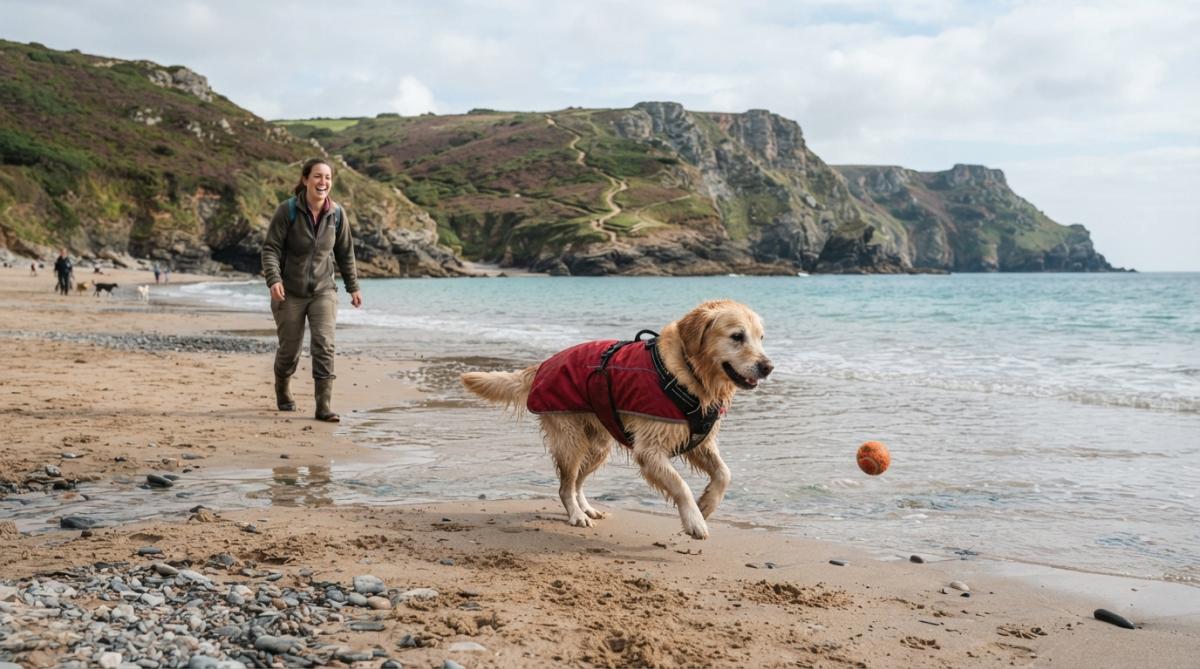
Top Coastal Beaches in Cornwall and Devon
Widemouth Beach (Cornwall). A 3-mile stretch of golden sand near Bude. Dogs are allowed year-round except during peak summer months when restrictions apply in certain sections. The beach is wide, giving plenty of space even when busy. The sand is firm, making it easier on dogs' paws.
Perranporth Beach (Cornwall). A 3-mile sandy beach with dunes. Dogs are allowed in winter (October-April) with no restrictions. During summer, dogs are restricted to certain areas. The beach has a gentle slope, making it accessible for older dogs.
Watergate Bay (Cornwall). A large sandy beach near Newquay. Dogs are allowed year-round, though peak summer sees restrictions in certain sections. The beach has good facilities including dog showers.
Goodrington Beach (Devon). A long sandy beach near Paignton. Dogs are allowed in winter months. The beach is backed by a promenade with cafés and shops.
Blackpool Sands (Devon). A small, sheltered pebble beach near Dartmouth. Dogs are allowed year-round. The beach is backed by tall cliffs, providing shelter from wind.
Beach Safety and Etiquette for Dogs
Coastal beaches present specific hazards that inland parks don't.
Salt water ingestion. Dogs drinking seawater can develop salt poisoning, causing vomiting, diarrhoea, and dehydration. Bring fresh water and encourage your dog to drink regularly. A collapsible water bowl takes minimal space in your rucksack.
Sharp shells and rocks. Beaches have broken shells, sharp stones, and sea urchin spines. After beach time, rinse your dog's paws thoroughly and check between the toes for cuts or embedded debris.
Tidal currents and rip tides. Some beaches have dangerous currents. Keep dogs on a lead or within close visual range in unfamiliar water.
Seaweed and algae. Blue-green algae can be toxic to dogs. If you see unusual algae blooms, keep your dog out of the water. Rinse your dog after beach time to remove seaweed and salt.
Other dogs and beach etiquette. Respect seasonal restrictions. Keep your dog under control. Use a lead if you're unsure about recall. Clean up after your dog, this protects the dog-friendly status of beaches.
South West Coast Path Dog Restrictions: What You Need to Know
The South West Coast Path itself has no blanket dog restrictions. However, specific sections and beaches have rules designed to protect ground-nesting birds, manage crowds during peak season, or protect sensitive habitats.
Leash Laws and Trail Etiquette
Dogs must be under control at all times on the South West Coast Path. This typically means on a lead in populated areas, though many sections allow dogs off-lead if they have reliable recall. Certain sections require dogs to be on leads year-round, typically near nature reserves or areas with ground-nesting birds. The most notable is the area around Exe Estuary (Devon), where dogs must be on leads during nesting season (typically March-August) to protect birds like plovers and terns.
Trail etiquette matters. If you see other walkers ahead, call your dog in and put them on a lead. This prevents conflicts and shows respect for other path users.
Seasonal Restrictions and Protected Areas
March-August (nesting season). Many sections restrict dogs or require leads to protect ground-nesting birds.
May-September (peak season). Some beaches restrict dogs during peak tourist season. Restrictions typically mean dogs are allowed before 10am and after 6pm.
Specific protected areas. National Trust properties along the coast sometimes have dog restrictions. Most allow dogs on leads, but some exclude them entirely from certain sections.
Dog Friendly Pubs and Cafés Along the South West Coast Path
Walking 10-15 miles daily requires food and rest stops. The South West has excellent dog-friendly pubs and cafés.
Refuelling Stops with Outdoor Seating
The Anchor Inn (Slapton, Devon). A traditional pub directly on the coast path. Dogs are welcome in the bar and outdoor garden. The food is proper pub fare, filling and satisfying. They have a water bowl outside.
The Turf Pub (Exminster, Devon). A quirky pub on the water with outdoor seating. Dogs are welcome. The location is scenic and the atmosphere is relaxed.
The Bottle Garden (Falmouth, Cornwall). A café with outdoor seating overlooking the harbour. Dogs are welcome on the terrace. They serve coffee, food, and have water available.
The Waving Bear (Dartmouth, Devon). A small café with outdoor tables. Dogs are welcome. They do excellent coffee and cakes.
What to Expect at Dog-Friendly Establishments
Dog-friendly pubs and cafés typically allow dogs in outdoor seating areas. Some allow dogs inside if they're well-behaved and on a lead. A genuinely dog-friendly establishment will have water available, won't mind if your dog is muddy, and won't charge extra for dogs.
When you arrive, ask before sitting down with your dog. Order food and drink. This protects the dog-friendly status of the establishment. If too many people use pub gardens as free rest stops without purchasing anything, pubs stop allowing dogs.
Safety Tips for Dogs on the Coastal Trail
Coastal walking presents hazards that inland paths don't. Preparing your dog and knowing how to respond prevents emergencies.
Hazards Specific to Coastal Walking
Cliff edges and steep descents. Dogs can misjudge distances and fall. Keep dogs on a lead on narrow cliff-top sections. Even confident dogs can slip on loose shale or make poor decisions near edges.
Exhaustion. Coastal terrain is more demanding than flat walking. Dogs tire faster on uneven ground. A dog that can walk 12 miles on a flat path might manage only 8 miles on coastal terrain. Watch for signs of exhaustion: slowing pace, reluctance to continue, excessive panting, or stopping frequently.
Heat and dehydration. Coastal sun reflects off rocks and water, intensifying heat. Dogs overheat more easily than humans. Bring water and offer it frequently.
Wildlife encounters. Coastal areas have rabbits, seabirds, and occasionally adders (venomous snakes). Keep dogs on a lead in areas with dense undergrowth. If your dog is bitten by a snake, seek veterinary care immediately.
Weather changes. Coastal weather changes rapidly. A sunny morning can become windy and cold by afternoon. Bring a dog coat or jumper for smaller dogs.
Emergency Vet Access and Preparation
Coastal areas are sometimes remote. The nearest vet might be 20+ minutes away. Knowing where vets are and having an emergency plan prevents panic.
Research vets before your trip. Identify the nearest emergency vet clinic to your accommodation. Write down the address, phone number, and opening hours.
Carry a basic first aid kit. Include bandages, antiseptic cream, pain relief (check with your vet about dosing), tweezers for removing thorns or splinters, and a thermometer.
Have pet insurance details accessible. If your dog needs emergency treatment, you'll need insurance information. Carry a copy of your policy details.
Know the signs of serious problems. If your dog is limping badly, not putting weight on a leg, bleeding heavily, or showing signs of shock (pale gums, weakness, rapid heartbeat), seek vet care immediately.
Weather and Terrain Difficulty Ratings for Dogs
Easy terrain (suitable for most dogs). Flat sandy beaches, well-maintained paths with minimal elevation change, paths with good grip underfoot.
Moderate terrain (suitable for fit adult dogs). Paths with some elevation change, mixed surfaces including shale and grass, occasional steep sections. Most of the South West Coast Path falls into this category.
Difficult terrain (suitable only for fit, experienced dogs). Steep cliff sections, loose shale, scrambling sections where you need to use hands, narrow paths with significant drops.
Most dog owners should stick to easy and moderate terrain.
What to Pack for Your Dog Friendly Holiday
Packing correctly makes the difference between a comfortable holiday and a stressful one.
Essential Walking Gear and Safety Equipment
Lead and collar. Bring two leads: a standard 6-foot lead for general use and a longer training lead (15-20 feet) for areas where off-lead walking is appropriate. Collars should be well-fitted.
Dog coat or jumper. Coastal weather is unpredictable. Even in summer, wind and rain can make dogs cold. A waterproof dog coat takes minimal space and is invaluable.
Paw protection. Dog booties or paw wax protect against sharp shells, hot sand, and salt damage. Test either option at home before your trip.
Water and bowl. Bring a collapsible water bowl and water bottle. Refill from streams or cafés along the route.
Waste bags and disposal. Bring more bags than you think you'll need. Coastal paths sometimes lack bins.
Identification. Ensure your dog has a collar tag with your phone number and a microchip registered to your current contact details.
First aid supplies. Bandages, antiseptic cream, tweezers for splinters, and a basic first aid kit.
Comfort Items for Self-Catering Stays
Dog bed or blanket. Dogs shouldn't sleep on cold floors. Bring a dog bed or a blanket they can nest into.
Food and water bowls. Holiday rentals don't always provide dog bowls. Bring collapsible bowls.
Dog food. Bring enough dog food for your entire stay. Changing food mid-holiday can cause digestive upset.
Toys and enrichment. Bring toys your dog enjoys. Chewing toys, balls, or puzzle toys keep dogs entertained during rest time.
Cleaning supplies. Bring towels specifically for your dog. Also bring enzymatic cleaner for accidents.
Medication and supplements. If your dog takes medication, bring the full supply plus extras.
| Item | Why It Matters |
|---|---|
| Dog lead (2x) | Safety and control on trails |
| Dog coat | Coastal weather is unpredictable |
| Paw protection | Sharp shells damage paws |
| Water bowl | Dogs need fresh water regularly |
| Waste bags | Environmental responsibility |
| Dog bed | Comfort in unfamiliar environment |
| Dog food | Prevents digestive upset |
| Cleaning supplies | Accidents happen |
Best Regions for Dog Walking: Cornwall, Devon and Somerset
The South West Coast Path spans three counties, each offering different terrain, scenery, and dog-walking experiences.
Scenic Routes and Difficulty Levels by Region
Devon. The Devon coast offers a mix of sandy beaches, dramatic cliffs, and charming villages. The terrain is moderately challenging. The Exe Estuary near Exmouth is scenic but requires dogs on leads during nesting season. Overall, Devon suits dogs with moderate fitness. The region has excellent dog-friendly pubs and cafés.
Cornwall. The Cornish coast is famous for dramatic cliffs and golden beaches. The terrain varies by section. Eastern Cornwall has moderate difficulty. Central Cornwall near Falmouth and Penryn is easier, with more beach walking. Western Cornwall near Land's End has some of the most dramatic and challenging terrain. Overall, Cornwall suits many dog fitness levels depending on which section you choose.
Somerset. The Somerset coast offers beautiful walking. The Exmoor section near Minehead has dramatic coastal scenery and challenging terrain. The region is quieter and less crowded. It suits dogs with good fitness levels.
Public Transport Logistics for Dogs
Driving. Most dog owners drive. It's the most flexible option. Dogs travel in your car, you control the journey, and you have transport for exploring beyond the trail.
Train travel with dogs. UK trains allow dogs, but policies vary by operator. Most require dogs to be on a lead and permit one dog per passenger. Dogs don't require a ticket on most services. However, trains are stressful for dogs. Check specific train operator policies before booking.
Accommodation near transport hubs. If you're arriving by train, book accommodation near the station for your first night. This gives your dog time to settle before starting the coastal walk.
Planning Your Route and Pacing
Most dog owners walk 8-12 miles daily on the South West Coast Path. This is sustainable for fit adult dogs over a week-long holiday. Pacing matters enormously.
Start with shorter days, 8 miles on day one, building to 10-12 miles by mid-week. This allows your dog to condition gradually. A dog that's unfit at the start will struggle by day four.
Plan rest days. After three or four days of walking, take a day off. Use it to explore the local area at a slower pace, visit dog-friendly beaches, or simply rest. Your dog will recover faster with a proper rest day.
Choose routes based on your dog's fitness and experience. First-time coastal walkers should avoid the most difficult sections. Stick to easier terrain until you understand how your dog handles coastal walking.
Planning a dog friendly holidays south west coast path adventure requires attention to detail, but the reward is a holiday that both you and your dog will remember. The key is choosing accommodation that genuinely suits dogs and understanding the specific challenges of coastal walking. Spring Barn at Bolberry Court offers the comfort, space, and trail access that make coastal dog holidays successful. The fully enclosed garden, direct path access, and proper heating mean you can focus on walking rather than managing accommodation problems. With proper planning, the South West Coast Path becomes an extraordinary shared experience with your dog. [Contact Spring Barn directly](https://springbarn.bolberrycourt.co.uk/contact/) to discuss your specific requirements and check availability for your dates.
Frequently Asked Questions
Are dogs allowed on the entire South West Coast Path?
Dogs are generally welcome on the South West Coast Path, but restrictions apply in certain areas. The 630-mile National Trail spans Cornwall, Devon, and Somerset, and whilst most sections permit dogs, some protected wildlife areas and seasonal restrictions exist. Always check local guidance before your dog friendly holiday, particularly during nesting seasons. Leash laws vary by region, so confirm requirements for your chosen route.
What should I look for in dog friendly accommodation South West Coast Path?
Choose self-catering cottages with fully enclosed gardens, direct trail access, and adequate space for your group. Spring Barn at Bolberry Court offers a luxurious option near Bolberry Down with a secure garden, underfloor heating, and modern facilities. Verify the property has comfortable bedding, well-equipped kitchens, and emergency contact support. Direct booking ensures you can ask specific questions about dog facilities before committing.
What are the best dog friendly beaches along the South West Coast Path?
Top dog friendly beaches include Slapton Sands in Devon and Perranporth in Cornwall, both offering expansive sand and sea access. Many beaches have seasonal restrictions, so visit outside peak nesting periods. Check local signage for leash requirements and tide times. Beaches near your self-catering base allow easy access for multiple visits during your holiday, making them ideal for daily play and swimming.
What should I pack for a dog friendly holiday on the South West Coast Path?
Essential items include a sturdy lead, harness, waste bags, fresh water container, and paw protection (booties for rocky terrain). Pack a first aid kit, any medications, and recent vet records. Bring towels for wet fur, a comfortable bed for your accommodation, and weather-appropriate gear like a dog coat. Don't forget treats for training and a collar with ID tags. Spring Barn's fully equipped kitchen means you can prepare fresh meals for your dog throughout your stay.
Are there dog friendly pubs and cafés along the South West Coast Path?
Yes, many establishments along the route welcome dogs, especially those with outdoor seating areas. Popular dog friendly pubs offer water bowls and sheltered spaces whilst you rest. Always check ahead and keep your dog on a lead inside establishments. These refuelling stops are perfect for breaks during longer walking days, allowing both you and your dog to recover before continuing your coastal trail adventure.
What safety precautions should I take when hiking with dogs on the coast?
Stay alert to coastal hazards including steep cliffs, strong currents, and salt water exposure. Keep your dog hydrated and avoid overexertion on hot days. Research emergency vet locations near your accommodation, Spring Barn provides local contact information. Check tide times before beach visits, watch for wildlife, and ensure your dog's vaccinations are current. Difficulty ratings vary by section; choose routes matching your dog's fitness level and age.
How do I get to the South West Coast Path with my dog by public transport?
Most UK trains and coaches allow dogs, though some require advance booking or additional fees. Check operator policies before travel. Once at your destination, local buses may permit dogs depending on the service. Driving offers more flexibility for dog friendly holidays, particularly if your vehicle has EV charging needs, Spring Barn includes on-site EV charging for guest convenience. Plan your transport logistics when booking your self-catering cottage.