
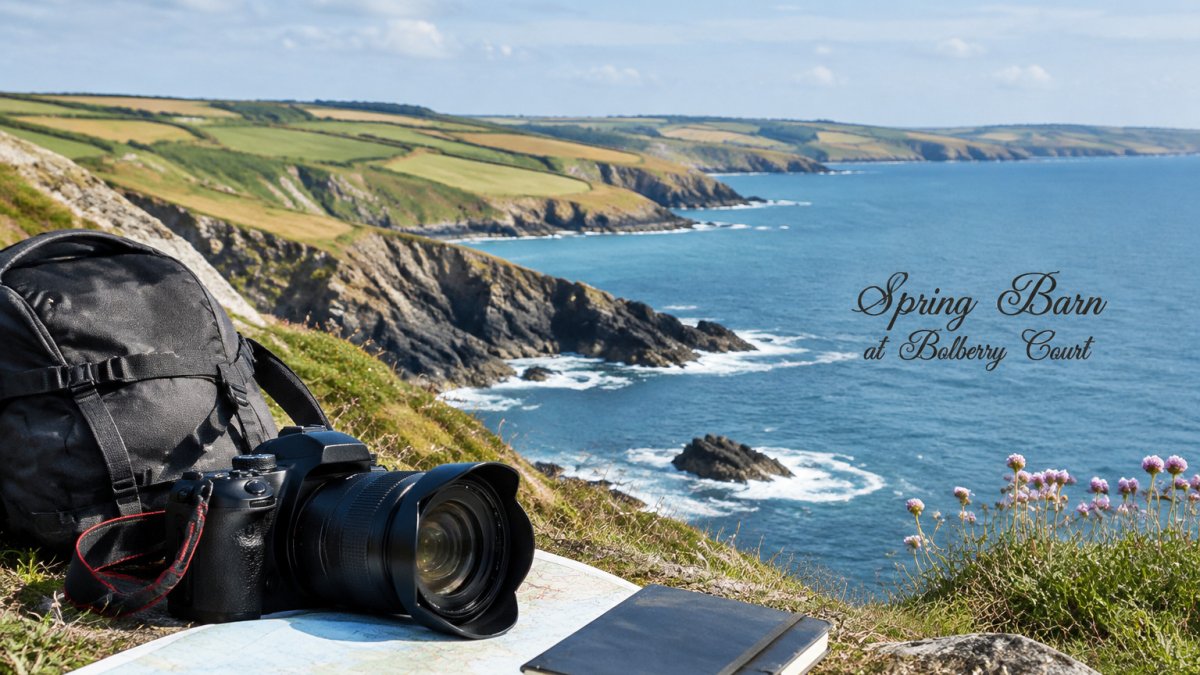
The Best Coastal Photography Trails in South Devon
27 November 2026
Last Updated: 25 November 2026
Quick Summary
The best coastal photography trails in South Devon run from Bolberry Down along the South West Coast Path, with the Bolberry Down loop, Bolt Tail and Hope Cove to Soar Mill Cove suiting different light and tides. Shoot the hour after sunrise and the hour before sunset, and check tide times before committing to a low-tide shot.
- The South Hams coastline bends through roughly 90 degrees between Bolt Tail and the Salcombe estuary, so light direction shifts by trailhead.
- Shoot Bolt Tail in the evening for a classic wide seascape, or in the morning for crisp rock detail.
- Soar Mill Cove receives direct light only in a short window around the middle of the day.
- Treat any coast path section with steep steps or exposed edges as one grade harder when carrying a tripod.
- Spring Barn at Bolberry Court sits less than half a mile from Bolberry Down and the coast path.
Table of Contents
- Why South Devon Coastal Walks Reward Photographers
- The Bolberry Down Walk: Clifftop Views Without the Crowds
- Hope Cove Walks: Coves, Cliffs and Harbour Light
- The Best Time to Photograph the Devon Coast
- Photography Access and Safety on the Cliff-Top Path
- What to Carry and How to Judge Route Difficulty
- Planning Your Stay at Spring Barn at Bolberry Court
- Frequently Asked Questions
Why South Devon Coastal Walks Reward Photographers
The best coastal hiking trails for photography in Devon share one quality: they put you in front of a view that changes every hour. This guide covers coastal photography trails around Bolberry, with notes on light, access and timing.
South Devon's stretch of the South West Coast Path is a photographer's playground for one simple reason. The coastline faces south and west, so the sun swings across the sea rather than hiding behind it, giving clean light on cliffs and coves for most of the day.
What Makes the South Hams Light So Good
Coastal photography trails live or die on light quality, and the South Hams delivers a particular kind of it. The sea acts as a giant reflector, bouncing soft light back onto cliff faces long after the sun has dropped behind a headland.
Mornings bring mist off the water. Evenings bring warm, low light across the rocks. Both reward an early start or a late finish.
Choosing Your Base for a Photography Trip
A photography trip works best when your base is close to the trailhead. Long drives eat into golden hour, and tired legs make for missed shots. Staying within walking distance of a coastal viewpoint means you can shoot sunrise, return for breakfast, then head out again for the evening.
The Bolberry Down Walk: Clifftop Views Without the Crowds
The Bolberry Down walk is a useful starting point for coastal photography trails in the area. It sits close to the National Trust land at Bolberry Down, with open clifftop paths and wide sea views.
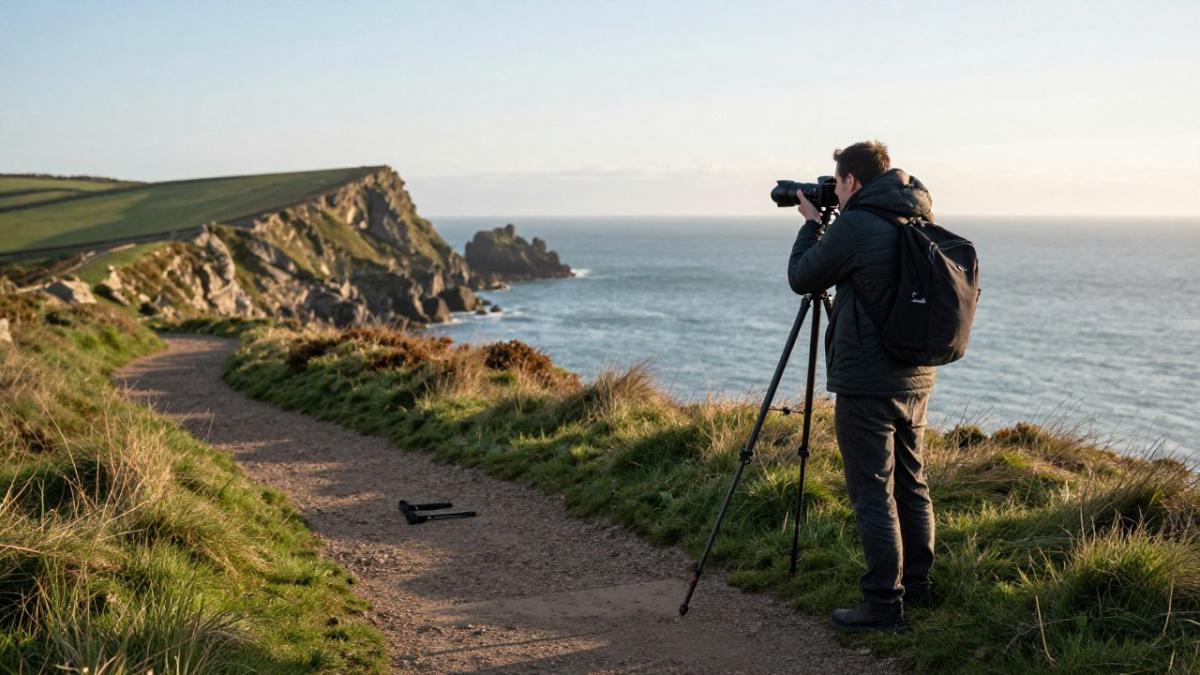
From the down you can pick up the South West Coast Path in either direction: west towards Bolt Tail for a rugged headland view, or east towards Hope Cove for a harbour scene.
For more quiet routes starting from the same headland, see our guide to hidden gem walks in the South Hams.
Hope Cove Walks: Coves, Cliffs and Harbour Light
Hope Cove offers two beaches, a small harbour and a cluster of whitewashed buildings framed by steep green cliffs. For coastal photography trails, it is the most versatile location in the area.
The outer beach at Mouthwell Sands has sand at low tide with the cliffs behind.
Soar Mill Cove, a short walk west, is worth planning around the tide. At low tide you get a sandy beach and rock pools; at high tide there is very little beach left.
Our guide to coastal walks near Hope Cove sets out seven routes with maps and difficulty levels if you want to plan a full day on foot.
The Best Time to Photograph the Devon Coast
The best time to photograph the Devon coast is the hour after sunrise and the hour before sunset, when low light rakes across cliffs and sand. But the more useful question is which direction the light is coming from at each trailhead, because the South Hams coastline bends through roughly 90 degrees between Bolt Tail and the Salcombe estuary. A viewpoint that is backlit at sunrise can be perfectly side-lit at sunset, and the difference is often a ten-minute walk.
Light Direction by Trailhead
Hope Cove and Mouthwell Sands (south-facing). The outer beach faces almost due south, so it catches light for most of the day and is one of the few local spots that works at midday in winter, when the sun stays low.
Soar Mill Cove (south-west-facing). The cove is enclosed by high ground on both sides, so direct light only reaches the sand for a short window around the middle of the day.
Seasonal Timing in South Devon
Spring and autumn give the best combination of soft light, quiet paths and long shadows. In midsummer the sun rises well before 5am and sets after 9pm, so a sunrise shoot means a very early start, but the long twilight either side gives you a usable window of an hour or more.
A useful rule of thumb for this coast: the further west you walk towards Bolt Tail, the more the evening light works in your favour, because you are looking back along the coastline towards the setting sun rather than away from it.
Tides, Wind and Visibility
Tide matters as much as light here. Mouthwell Sands and Soar Mill Cove both change character completely between high and low water, at low tide you gain sand, rock pools and foreground interest; at high tide the beach narrows sharply and the composition shifts to cliffs and water.
Wind is the other variable. An exposed headland like Bolt Tail can be calm in the car park and blowing a steady onshore breeze at the viewpoint, which rules out a lightweight tripod and sends sea spray across the front element.
Visibility changes fast. For a deeper look at how conditions shift through the year, read our seasonal guide to coastal hiking.
Planning Around the Light, Not the Clock
Spring Barn at Bolberry Court sits in Bolberry, close to Bolberry Down and the South West Coast Path, so you can plan sunrise and evening shoots without a long drive. If you want to check availability around a particular tide or a promising weather window, get in touch with us and we can talk through the timing.
Photography Access and Safety on the Cliff-Top Path
Cliff-top photography carries real risk, and the coast path has unfenced edges in places. Stay back from the lip, especially in wind.
Wet rock and loose soil near the edge are the most common cause of slips on these paths. Keep your tripod well back and your footing checked before you frame a shot.
If you are new to the coast path, our honest review of whether the coast path suits beginners covers which sections are safest and what gear you actually need.
What to Carry and How to Judge Route Difficulty
Match your kit to the route, not the other way around. A short clifftop walk needs far less than a full day on the coast path, and carrying too much slows you down and tires your legs. The table below compares the main photography routes from Bolberry and Hope Cove on the things that actually affect a shoot: distance, surface, climb, time, and what the route is best for.
| Route | Distance (approx.) | Surface and terrain | Total climb | Walking time | Best for |
|---|---|---|---|---|---|
| Bolberry Down loop | 1-2 miles | Short grass and firm path | Minimal | Under an hour | Sunrise and sunset wide views |
| Bolberry Down to Bolt Tail and back | 3-4 miles | Coast path, uneven in places | Moderate, rolling | Two to three hours | Dramatic coastline and seascape |
| Hope Cove to Soar Mill Cove | 3-4 miles each way | Coast path, some steep steps | Moderate to strenuous | Half a day return | Coves, rock pools, harbour detail |
| Hope Cove village and harbour | Under 1 mile | Paved lanes and beach | Minimal | Under an hour | Harbour detail, reflections, boats |
Distances and times are approximate and depend on where you start and how often you stop, and photographers stop a lot. Treat the walking times as a minimum and add at least half as much again if you are carrying a tripod and shooting seriously.
Parking, Access and Facilities
Bolberry Down has a National Trust car park close to the coast path, which makes it the simplest trailhead for an early or late shoot. Hope Cove has limited parking near the harbour and fills quickly in summer, so an early arrival is worth the effort.
Kit That Earns Its Place
Carry a lightweight tripod, a polarising filter for cutting glare off wet sand and rock pools, and a cloth for sea spray. A polariser is especially useful here because the sea acts as a giant reflector, it will deepen the sky and cut reflections on wet rock, but be careful not to over-polarise and flatten the water. A graduated filter helps on the west-facing headlands where the sky is much brighter than the foreground.
Bring a waterproof layer and something windproof even on a clear forecast, and wear footwear with real grip. Check the route's terrain and total climb before you commit, and always tell someone where you are going.
Judging Difficulty for a Photography Walk
A route that is easy on foot can be awkward with a tripod and a full bag. As a rule, treat any coast path section with steep steps or exposed edges as one grade harder than the walking guide suggests, because you will be stopping, setting up and crouching, often on uneven ground.
If you are new to the coast path, our honest review of whether the coast path suits beginners covers which sections are safest and what gear you actually need. If you would rather base yourself close to the trailhead, view Spring Barn and its location, the barn sleeps up to 10 guests.
Planning Your Stay at Spring Barn at Bolberry Court
A photography trip is only as good as the base you return to.
The barn sleeps up to 10 guests across five proper bedrooms, with a large oak table that seats everyone together, a practical base for photography groups and multi-generational families alike. Underfloor heating and a log burner keep the house warm, and the fully enclosed garden gives you a secure outdoor space.
We offer any-day arrivals outside peak summer school holidays, so you can plan around a good weather window rather than a fixed changeover day. Off-road parking for up to four cars takes the stress out of narrow Devon lanes.
Choosing where to shoot is the easy part. The harder question is whether your base puts you close enough to the coast to catch the light when it finally arrives.
Frequently Asked Questions
What are the best coastal photography trails in South Devon?
The strongest options cluster around the South Hams. The Bolberry Down walk gives you clifftop paths and panoramic sea views with far fewer people than better-known spots. Hope Cove walks add a harbour, a sandy cove and rocky shoreline in one short stretch. Both sit on the South West Coast Path, so you can link them into a longer circular walk or an out-and-back route depending on how much gear you are carrying.
What is the best time of day to photograph the Devon coast?
The hour after sunrise and the hour before sunset give the softest light and the longest shadows across the cliffs. Midday sun flattens the coastal scenery and blows out highlights on the sea. If you can only shoot once, plan around golden hour and check the tide first, because several coves near Hope Cove and Soar Mill Cove look completely different at high and low water.
How difficult are the coastal walks near Salcombe and Bolberry?
The Bolberry Down walk is largely level on wide, well-made paths, which suits groups carrying camera bags and tripods. Routes dropping into Hope Cove and Soar Mill Cove involve steep climbs and uneven trail surfaces, so allow more walking time than the distance suggests. Check the terrain before you commit, especially with children or older walkers in the group.
Where should photographers stay to reach these trails easily?
Staying close to the trail saves you the drive before sunrise. Spring Barn at Bolberry Court sits in Bolberry itself, moments from the South West Coast Path and National Trust land on Bolberry Down, and sleeps up to 10 across five bedrooms. A large oak table seats the whole group, and the enclosed garden and underfloor heating make it workable in cooler months. [Get in touch with us](https://www.bolberrycourt.com/index.asp#contact-us) to check availability.
